ChatGPT Ads for ecommerce: the complete guide (2026)
 Anatolii MelnychenkoHead of Client MarketingUpdated 19 Лис 20269 min read
ChatGPT now shows ads. You can buy them yourself in a self-serve Ads Manager in 89 countries, from the US and the UK to Poland, Slovakia and Ukraine. For an online store this is the first new paid channel in years where the auction is still thin and most of your competitors have not started.
This guide covers what a ChatGPT ad looks like, who sees it, how targeting and bidding work, what it costs, how to track sales from Shopify and how we run the first test for a store. It reflects the platform as of November 2026. OpenAI changes the product every few weeks, so check the dates on anything you read about it, including this page.
What a ChatGPT ad looks like
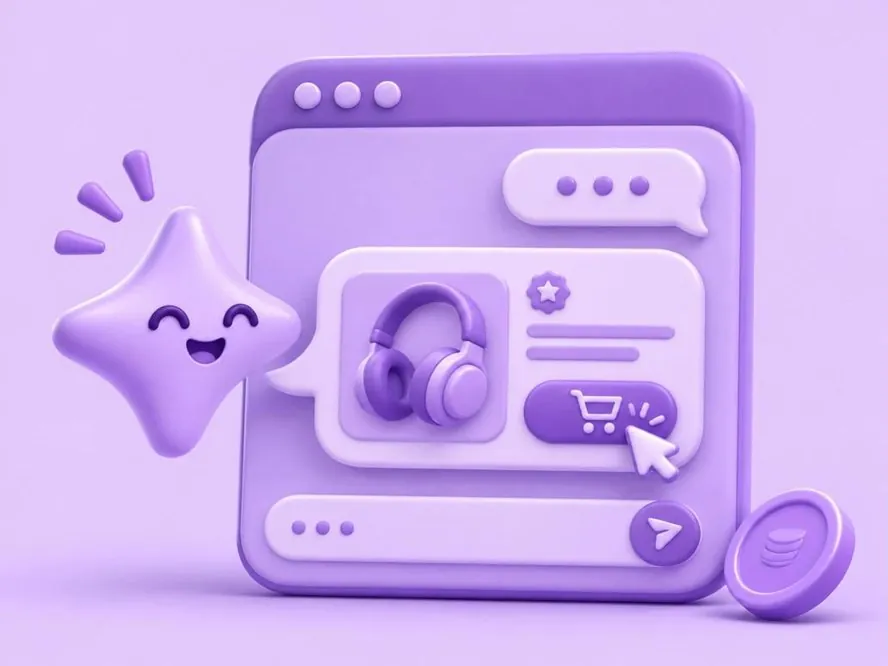
Right now there is one documented format: a sponsored card under the answer. It has a title of 3 to 50 characters, a body of up to 100 characters, an image, your favicon and a link. OpenAI labels it as sponsored and keeps it separate from the answer itself, so the model does not mention your brand because you paid.
That last point matters for planning. Paid placement and the answer are two different things. If you want ChatGPT to recommend your products inside the answer, that is organic work on your product data, reviews and mentions, which we cover in our AI SEO and GEO page. Ads buy you the card next to the answer.
Who sees ChatGPT ads
- Free and Go users only. People on Plus, Pro, Business, Enterprise and Education plans see no ads.
- Adults only. Accounts identified as under 18 are excluded.
- No sensitive topics. Ads do not appear in conversations about health and mental health, politics, self-harm, weapons and similar subjects.
- 89 countries. After the expansion on 21 October 2026 the self-serve list covers most of Europe, including Ukraine, Slovakia, Poland, the Czech Republic and Germany, plus the US, Canada, the UK, Latin America and much of Asia. Digital Applied keeps a dated list of markets.
The free-user rule shapes who you reach. Heavy professional users pay for ChatGPT and never see ads. Shoppers asking “what is a good gift for a 10-year-old who likes science” often use the free plan. That makes the channel a better fit for consumer products than for B2B software.
Which products and categories fit
Allowed and common: home and lifestyle goods, fashion, beauty, gifts, hobby products, travel, local services, digital products and education. Not allowed: dating, alcohol, tobacco, gambling and political ads. Health and financial services are restricted to the US and reviewed case by case.
The stores that do best are the ones whose buyers ask questions before they buy. If people compare options, ask for advice or need help choosing a size, a material or a gift, they are already having that conversation in ChatGPT.
How targeting works
There are no keywords. You set context hints for each ad group: plain-language descriptions of the themes and intents where your ad fits, for example “choosing a linen bedding set” or “gift ideas for runners”. ChatGPT matches ads to the current conversation and, if the user allows it, to past chats and memory.
On top of that you can choose:
- countries, and in the US also states, DMAs and ZIP codes;
- platforms: web, iOS or Android;
- custom audiences from your email or phone lists, with at least 25,000 matched users (OpenAI recommends 100,000).
Demographic targeting, lookalikes and site retargeting are not documented yet. Treat context hints as the main lever and write them the way your customers talk.
Bidding and budgets
You pick one of three objectives:
| Objective | You pay for | Use it when |
|---|---|---|
| Reach | Impressions (CPM) | Brand launches and awareness |
| Clicks | Clicks (CPC) | The first test, while you learn what works |
| Conversions | Clicks, optimised for one conversion event | After tracking works and you have some sales data |
The minimum daily budget is $25 per campaign in the US, and there is no monthly minimum in self-serve. OpenAI suggests starting CPC bids of $3 to $5 and does not publish average prices or benchmarks yet. The auction is second-price and weighs relevance, so a better ad and a better landing page can win at a lower bid. We break the numbers down in How much do ChatGPT ads cost.
Tracking sales from your Shopify store
Do this before you launch. Conversion-optimised campaigns lock their conversion event when you create them, and you cannot switch a click campaign to conversions later.
- Install the OAIQ pixel. OpenAI generates a JavaScript pixel that sets a first-party cookie for 30 days after a click and tracks page, content and commerce events. On Shopify we add it through Customer Events.
- Send purchases through the Conversions API. Server-side events catch the sales that the browser misses. Send the same event ID from the pixel and the API so OpenAI counts each order once.
- Allow OpenAI’s crawlers. OAI-AdsBot checks your landing pages against ad policy. If your robots.txt or your firewall blocks it, your ads will not get approved.
- Tag the links. Add UTM parameters, so GA4 and Shopify reports show ChatGPT as its own channel.
Expect conversions to show up in Ads Manager 24 to 48 hours after they happen. One-day view-through conversions appear in a separate column and do not affect bidding.
Writing the ad
With 50 characters for the title and 100 for the body, the ad has room for one idea. What to keep in mind:
- Answer the question the person just asked. If the chat is about gifts for a gardener, the title names the gift, not your brand.
- Put the concrete reason to click in the body: free delivery, a size guide, a 30-day return, a price.
- Use a product photo on a clean background. The card is small, so busy lifestyle shots turn into noise.
- Send people to the page that continues the conversation: a collection or a buying guide, not your home page.
How we run the first test
For a Shopify store with a clear product and working tracking, our first month looks like this:
- Week 1: account, verification, pixel and Conversions API, landing pages checked, three to five ad groups built around buyer questions.
- Weeks 2 to 4: click-based campaigns at $3 to $5 CPC, daily checks, weak ad groups paused, budget moved to the themes that bring add-to-carts and orders.
- Week 5: a report with cost per order, revenue and a decision: scale, switch the winners to conversion bidding, or stop.
Treat the first month as a paid experiment. The channel is new, there are no benchmarks yet, and results vary by category. Some third-party tests report low click-through rates for B2B offers, while retailers see that visitors arriving from AI tools convert better than average referral traffic.
ChatGPT ads and GEO work together
Ads give you a spot next to the answer today. GEO work gets your brand into the answer itself over the coming months. The two help each other: product pages that AI can read make better landing pages, and paid traffic shows you which conversations bring buyers, so you know where to focus organic work.
Checklist before you launch
- Your products fit the allowed categories and your countries are on the list.
- The OAIQ pixel and the Conversions API both send purchases with a shared event ID.
- OAI-AdsBot can reach your landing pages.
- Landing pages load fast on mobile and match the question the ad answers.
- You have a test budget of at least $25 a day for four weeks.
- You decided in advance what cost per order makes the channel worth scaling.
If you want us to set it up, our ChatGPT Ads launch pack covers the account, tracking, creatives and the first test period for a fixed $1,000.
Anatolii MelnychenkoHead of Client Marketing at ECOM-X. Runs Google Ads and paid social for Shopify brands selling to the US and Europe.Meet the team ↗